Suddenly, you’re dealing with town requirements, HOA guidelines, permits, taxes… and none of it is explained in one place. If you’ve ever felt confused (or mildly frustrated) trying to make sense of it all, you’re definitely not alone.
The reality is, navigating rental regulations here isn’t always simple—but it is manageable once you know what to focus on.
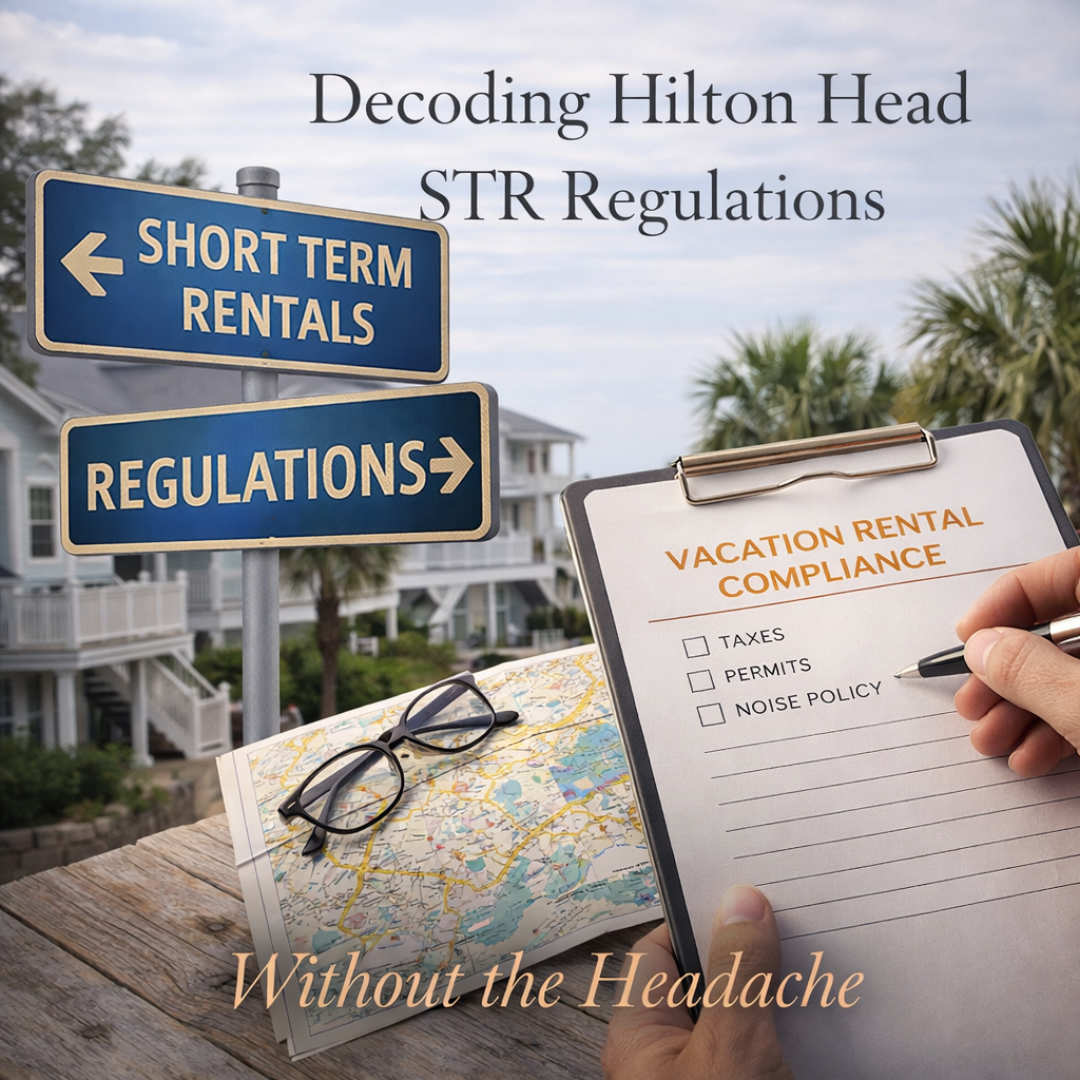
Understanding Hilton Head STR Regulations

Let’s start with the big one: Hilton Head STR regulations.
These are the rules set by the town, and they apply to pretty much every homeowner who wants to rent short-term. They’re not meant to make your life harder—they’re there to keep things organized and protect both residents and visitors.
That said, they can still feel like a lot at first.
Most homeowners will need to deal with things like:
- Business licensing
- Local taxes (yes, there are a few)
- Occupancy limits
- Parking rules
- Noise policies
Following Hilton Head rental laws isn’t just about staying out of trouble—it helps keep your rental running smoothly and professionally.
Breaking Down Short Term Rental Rules
Once you get past the town-level stuff, you’ll run into the day-to-day short term rental rules.
This is where things get more practical—how your property is actually used when guests are staying there.
These island short term rules usually cover:
- How many guests you can host
- Whether large gatherings are allowed
- Trash and cleanliness expectations
- Having someone available if issues come up
None of this is complicated on its own—but when you’re juggling everything at once, it can feel like a lot of moving parts.
Don’t Overlook Island HOA Rental Policies

Here’s where a lot of homeowners get tripped up: the HOA.
Your community may have its own island HOA rental policies, and sometimes they’re even stricter than the town rules. That’s why this step is so important.
Depending on where your home is, you might run into:
- Limits on how often you can rent
- Quiet hours that are actually enforced
- Guest registration requirements
- Approval steps before renting
You could be fully compliant with Hilton Head STR regulations and still run into issues if your HOA has additional restrictions—so it’s worth double-checking early.
Vacation Rental Compliance: What It Really Means
When people talk about vacation rental compliance, it sounds more complicated than it actually is.
At its core, it just means everything is set up the right way:
- Your property is registered
- Taxes are handled properly
- You’re following occupancy and safety guidelines
- The home is maintained the way it should be
Once you’ve got a system in place, this part becomes routine. It’s really just about staying consistent.
Tips for Navigating Rental Regulations Without the Stress

If this all feels like a lot, that’s normal. Most homeowners don’t figure it out overnight.
A few things that help:
- Start with your HOA—know those rules first
- Don’t assume anything—always double-check
- Keep your paperwork organized (you’ll thank yourself later)
- Stay updated, because rules do change
And honestly? Having someone local who understands navigating rental regulations on Hilton Head can save you a lot of time and second-guessing.
You Don’t Have to Figure It Out Alone
At the end of the day, owning a rental here should feel like an opportunity—not a headache.
Yes, there are Hilton Head STR regulations, short term rental rules, and island HOA rental policies to follow—but once you get a handle on them, things start to click.
And if it ever feels confusing again (because it probably will at some point), just know—that’s part of the process. You’re not the only one figuring it out as you go.