Owning an island property sounds amazing—and it is. But once you start renting it out, there’s always this quiet tension in the background.
Like… should I block this week for myself or leave it open and make money?
If you’ve felt that, you’re not alone.
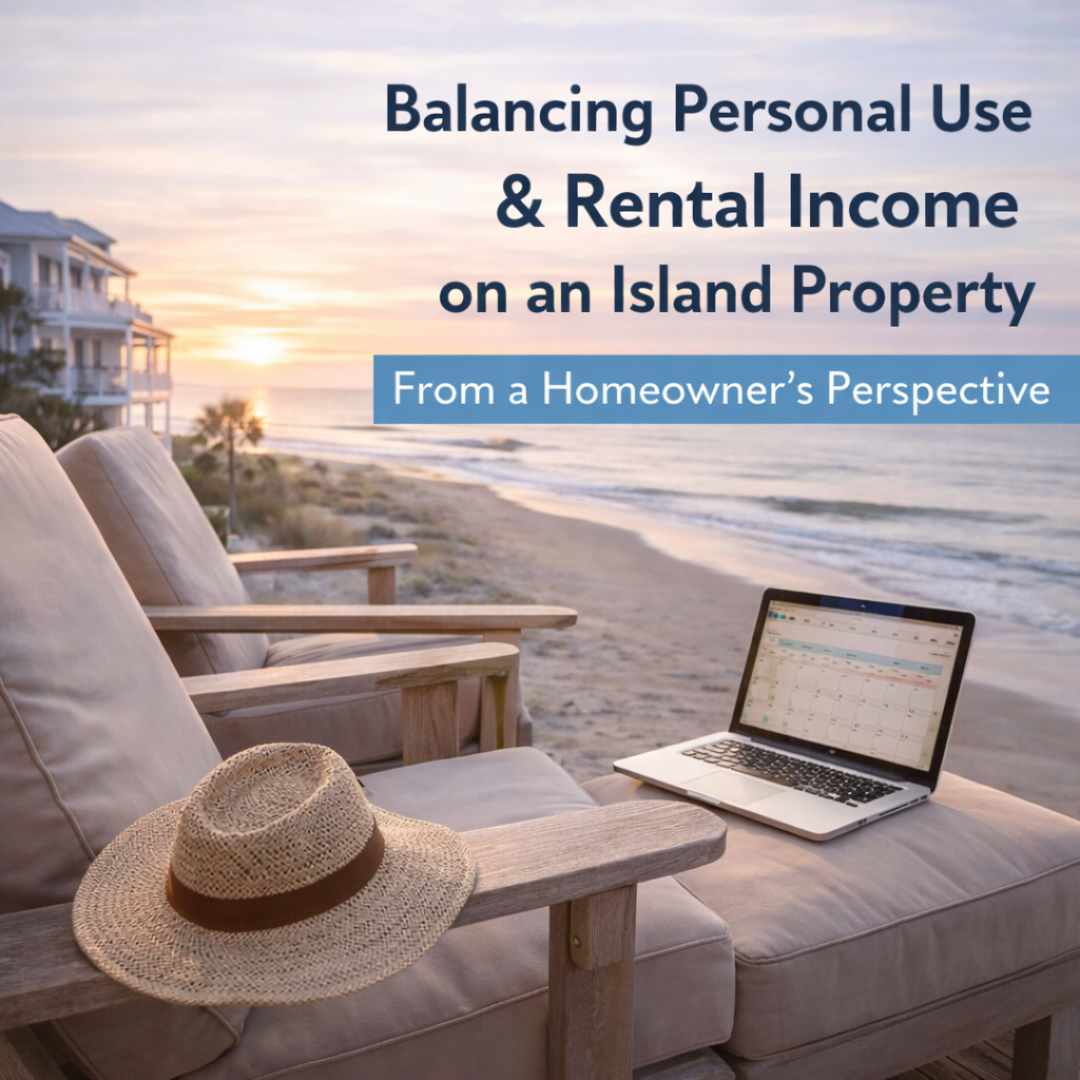
Figuring out how to enjoy your place while still building a solid vacation rental income strategy is kind of the whole game. And honestly, it’s less about strict rules and more about being a little intentional with how you use your time there.
Be honest about how often you’ll actually use it
This is where most people get it wrong.
At the start, it’s easy to think: “I’ll come here all the time.” Then life happens, and suddenly those blocked weeks just sit there unused.
If you’re trying to balance rental and personal use, you have to be realistic. Not optimistic—realistic.
Instead of blocking a bunch of dates “just in case,” pick the ones you know you’ll use. The rest? Let them work for you.
Your calendar matters more than you think

This isn’t about filling every single night. It’s about being smart with timing.
Good rental calendar planning is really just knowing when your place is most valuable—and not getting in your own way during those times.
A few things that help:
- Keep peak weeks (summer, holidays) mostly open
- Use your place during quieter periods
- Avoid random short blocks that break up bookable dates
When you optimize rental booking calendar, you start to notice something: fewer gaps, better bookings, less stress.
Not all weeks are equal
This one took me a while to really understand.
You might think, “It’s just one week, I’ll use it.” But depending on when that week is, it could be a big deal.
If you’re trying to maximize rental revenue, you have to think in terms of value, not just time.
One peak summer week can bring in way more than multiple off-season bookings. So using your place during those high-demand times has a bigger impact than it seems.
Not saying don’t use it—just know what you’re trading off.
Treat your own stays like bookings
This sounds a bit rigid, but it actually makes things easier.
If you treat your home like it’s always available to you, your calendar gets messy fast. Last-minute changes, missed bookings, all of that.
A better approach is to treat your own stays like actual reservations:
- Book them ahead of time
- Stick to them
- Avoid shifting things around during busy seasons
Managing a personal use vacation rental this way keeps everything cleaner—and way less stressful.
Pay attention to what actually happens
After a few months (or a season), you’ll start noticing patterns.
Certain weeks book instantly. Others don’t. Some dates always get higher rates.
That’s where things start to click.
If you want to increase island property income, this is where the easy wins are. You’re not guessing anymore—you’re adjusting based on what’s already happening.
And over time, your rental calendar planning just gets better without you overthinking it.
You don’t have to be extreme about it
This isn’t about turning your place into a full-time business if you don’t want that.
You bought it for a reason. You should enjoy it.
The goal is just to balance rental and personal use in a way that makes sense for you—not to squeeze every possible dollar out of it.
If your key revenue periods are covered, you can relax a bit with the rest.
That’s really it
There’s no perfect formula.
Some people lean more toward income. Others use their place a lot more. Most fall somewhere in between.
But if you:
- stay consistent with your vacation rental income strategy
- optimize rental booking calendar where it matters
- and stay aware of when to maximize rental revenue
you’ll naturally start to increase island property income without feeling like you’re giving anything up.
And honestly, that’s the sweet spot— a place you actually enjoy, that also pulls its weight.